Your Pre eclampsia screening blood test images are ready in this website. Pre eclampsia screening blood test are a topic that is being searched for and liked by netizens now. You can Get the Pre eclampsia screening blood test files here. Find and Download all free vectors.
If you’re looking for pre eclampsia screening blood test images information linked to the pre eclampsia screening blood test keyword, you have visit the right site. Our site frequently gives you suggestions for viewing the maximum quality video and picture content, please kindly surf and find more informative video content and graphics that match your interests.
Pre Eclampsia Screening Blood Test. Placental Growth Factor PlGF is the preferred serum marker for pre-eclampsia prediction. Blood pressure measurements are routinely used to screen for preeclampsia. The current NICE guidance has said that in women whom doctors think may have pre-eclampsia and who are between 20 weeks and 34 weeks in. Screening uses the same blood as your CFTS test You must opt-in for PE screening on the CFTS test request form Screening requires.
 Pre Eclampsia Screening Vcgs From vcgs.org.au
But less than 1 in 200 05 will get severe pre-eclampsia before 34 weeks gestation. Blood testing identifies preeclampsia disease risks in pregnancy months before symptoms. Fortunately this is not completely true. Your risk of developing pre-eclampsia is calculated from the results of. Pregnancy poisoning is somewhat misleading. Serum urate mean for gestational age 2SD.
But less than 1 in 200 05 will get severe pre-eclampsia before 34 weeks gestation.
The blood test results are combined with. The patients arm should be at the level of the right atrium of the heart. It also permits the initiation of treatment quickly when necessary. It affects 2-5 of all pregnant women. The risk of pre-eclampsia is higher if you have had previous blood pressure problems. Performed between 10 weeks 0 days and 13 weeks 6 days gestation the test combines personal history ultrasound markers blood pressure and analysis of three biological markers in the patients blood to yield a risk assessment.
 Source: researchgate.net
It measures levels of a protein called placental growth factor PIGF. The current NICE guidance has said that in women whom doctors think may have pre-eclampsia and who are between 20 weeks and 34 weeks in. An ultrasound examination may be included. The PLGF test is the first-of-its-kind in the world to check for pre-eclampsia the NHS noted. It is one of the most common life threating.
 Source: aafp.org
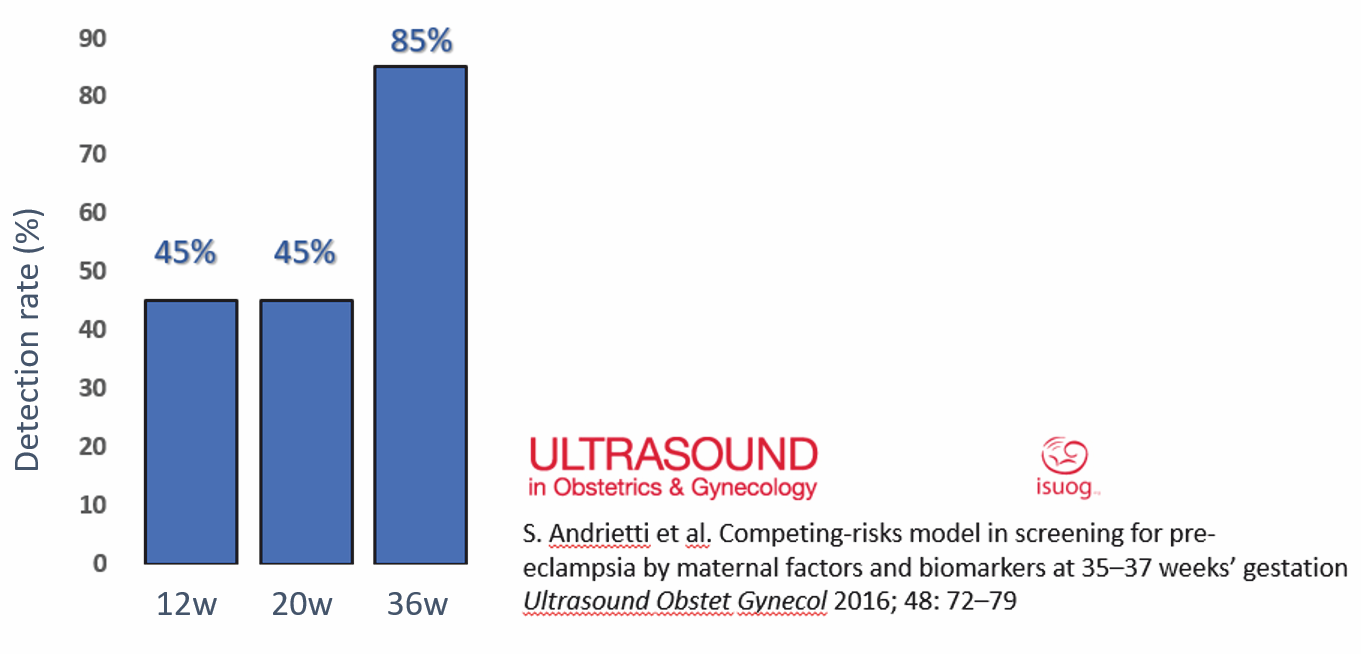
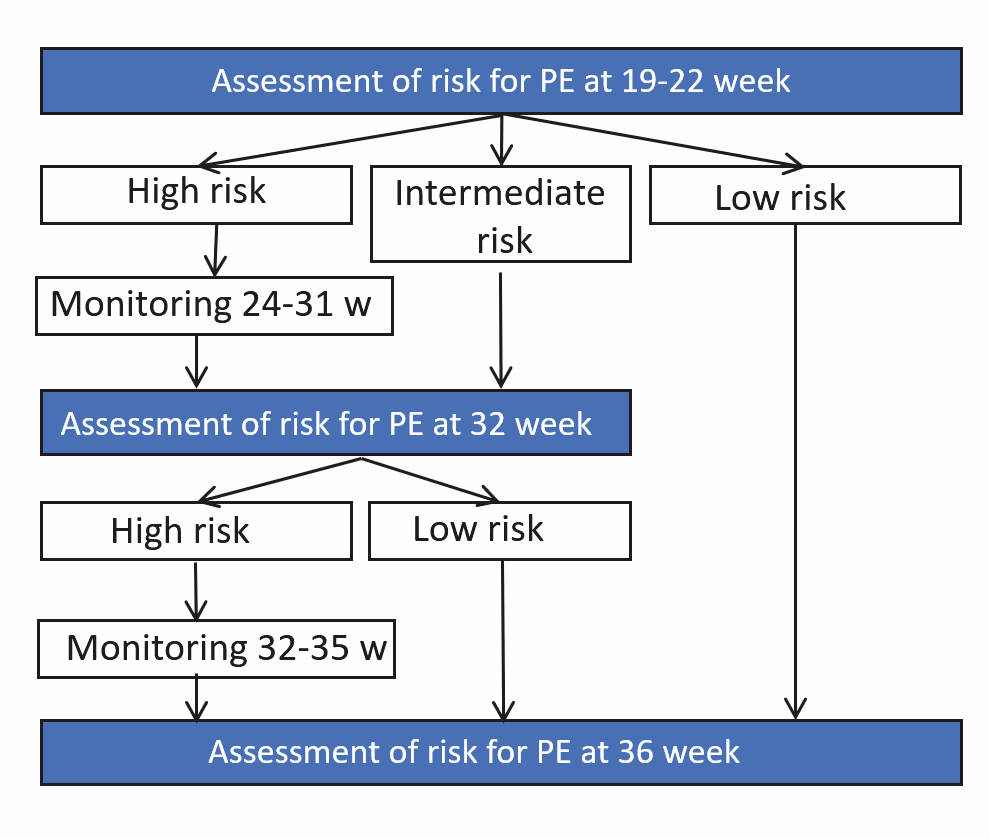
Performed between 10 weeks 0 days and 13 weeks 6 days gestation the test combines personal history ultrasound markers blood pressure and analysis of three biological markers in the patients blood to yield a risk assessment. This screening test is done during the first trimester 11 to 14 weeks to identify if you are at high risk of developing pre-eclampsia particularly before 37 weeks gestation. Preeclampsia Screen T1 SM is an advanced blood test that helps determine your patients risk for early onset preeclampsia. Internationally preeclampsia is defined as new-onset gestational hypertension systolic blood pressure 140 mmHg andor diastolic blood pressure 90 mmHg associated with new-onset of at least one of proteinuria maternal organ dysfunction liver neurological haematological or renal involvement or uteroplacental dysfunction at or after 20 weeks. But now screening can be performed at the 12-14 week scan to identify.
Source: vcgs.org.au
Is an advanced blood test that helps determine your risk for early onset preeclampsia. Internationally preeclampsia is defined as new-onset gestational hypertension systolic blood pressure 140 mmHg andor diastolic blood pressure 90 mmHg associated with new-onset of at least one of proteinuria maternal organ dysfunction liver neurological haematological or renal involvement or uteroplacental dysfunction at or after 20 weeks. You will also be asked some basic questions about your medical history and pregnancy. But less than 1 in 200 05 will get severe pre-eclampsia before 34 weeks gestation. Screening uses the same blood as your CFTS test You must opt-in for PE screening on the CFTS test request form Screening requires.
 Source: ultraheli.ee
What is the pre-eclampsia test. Testing to detect the pre-eclampsia may use either PlGF alone which may be lower in pre-eclampsia or a measurement of both proteins where the increased ratio of sFlt to PlGF can guide the diagnosis towards pre-eclampsia. But even low risk women can get it. If the patients upper arm circumference is 33 cm a. Screening for pre-eclampsia and aneuploidy during your nuchal translucency appointment this involves.
 Source: slideplayer.com
Fortunately this is not completely true. But less than 1 in 200 05 will get severe pre-eclampsia before 34 weeks gestation. Platelet count 150x109l. Blood test If youre between 20 weeks and 35 weeks pregnant and your doctors think you may have pre-eclampsia they may offer you a blood test to help rule out pre-eclampsia. The PLGF test is the first-of-its-kind in the world to check for pre-eclampsia the NHS noted.
 Source: ultraheli.ee
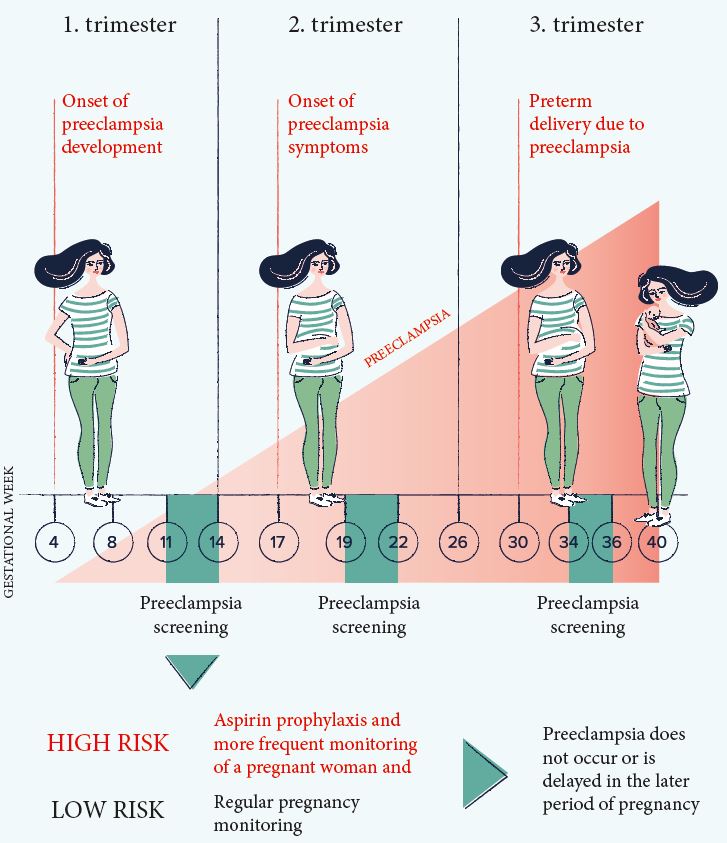
An ultrasound examination may be included. The test aids in ruling out the condition on the same day and in turn reduces stress and anxiety. Pre-eclampsia screening is done in the first trimester when your baby is at least 11 weeks old and less than 14 weeks old. Trials of the new PLGF blood test which costs about 70 show it speeds up diagnosis meaning life-threatening complications to the mother and baby can be avoided. Screening for pre-eclampsia and aneuploidy during your nuchal translucency appointment this involves.
 Source: efcni.org
The blood test results are combined with. In the past there was no way of screening for pre-eclampsia. It suggests that there is some kind of toxic reaction in the pregnancy. Screening for pre-eclampsia and aneuploidy during your nuchal translucency appointment this involves. The patients blood pressure should be measured while she is relaxed quiet and in a sitting position with her legs uncrossed and her back supported.
 Source: slideplayer.com
Pre-eclampsia screening is done in the first trimester when your baby is at least 11 weeks old and less than 14 weeks old. In some countries a blood test not yet available in the United States measures the ratio between two proteins found in the placenta sFLT and PIGF to predict which women suspected of preeclampsia will develop the condition in. It is one of the most common life threating. Pre-eclampsia screening is done in the first trimester when your baby is at least 11 weeks old and less than 14 weeks old. Pregnancy poisoning is somewhat misleading.
 Source: ejog.org
Is an advanced blood test that helps determine your risk for early onset preeclampsia. Screening uses the same blood sample collected for CFTS. The optimal time for screening is between 11 and 136 weeks of gestation as in order to be effective treatment needs to be started before 16 weeks of pregnancy. Platelet count 150x109l. An ultrasound to assess blood flow to the uterus.
 Source: sciencedirect.com
But less than 1 in 200 05 will get severe pre-eclampsia before 34 weeks gestation. Two-stage screening for preterm preeclampsia at 11-13 weeks gestation Two-stage screening and biomarker testing for only part of the population will have financial benefits over conducting the test for the entire population. Pre-eclampsia screening is done in the first trimester when your baby is at least 11 weeks old and less than 14 weeks old. Blood tests and thresholds for medical review. The test aids in ruling out the condition on the same day and in turn reduces stress and anxiety.
 Source: researchgate.net
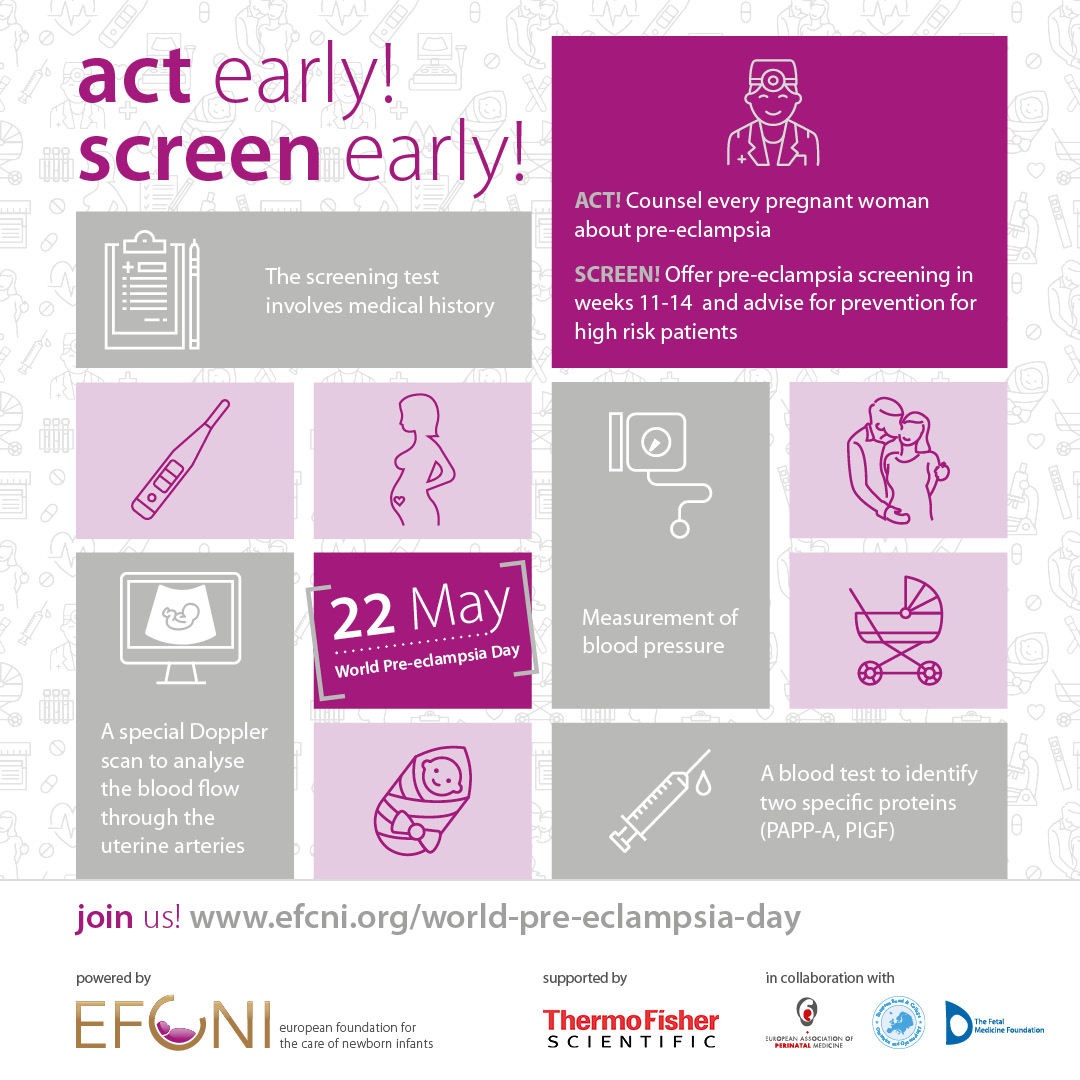
Placental growth fac-tor is a marker for early onset pre-eclampsia in pregnancy. A blood test to measure PaPP-A and PLGF protein which are both produced by the placenta. The risk of pre-eclampsia is higher if you have had previous blood pressure problems. The test aids in ruling out the condition on the same day and in turn reduces stress and anxiety. What is the pre-eclampsia test.
 Source: efcni.org
In the past there was no way of screening for pre-eclampsia. Is an advanced blood test that helps determine your risk for early onset preeclampsia. It involves a simple blood test and measurement of your blood pressure. Blood test If youre between 20 weeks and 35 weeks pregnant and your doctors think you may have pre-eclampsia they may offer you a blood test to help rule out pre-eclampsia. AST or ALT mean for gestational age 2SD.
 Source: efcni.org
If the patients upper arm circumference is 33 cm a. Screening uses the same blood sample collected for CFTS. Screening for Early-onset Pre-eclampsia is offered by Femina as an option with the combined first trimester screening test CFTS patients must opt-in on the test request form. But now screening can be performed at the 12-14 week scan to identify. Blood pressure measurements are routinely used to screen for preeclampsia.
 Source: efcni.org
Performed between 10 weeks 0 days and 13 weeks 6 days of pregnancy NTDs preeclampsia screening test combines personal history ultrasound measurements blood pressure and analysis of three biological markers in the. Platelet count 150x109l. How is pre-eclampsia screening performed. Blood testing identifies preeclampsia disease risks in pregnancy months before symptoms. In the past there was no way of screening for pre-eclampsia.
 Source: thelancet.com
Trials of the new PLGF blood test which costs about 70 show it speeds up diagnosis meaning life-threatening complications to the mother and baby can be avoided. Blood pressure measurements are routinely used to screen for preeclampsia. Placental growth fac-tor is a marker for early onset pre-eclampsia in pregnancy. Performed between 10 weeks 0 days and 13 weeks 6 days of pregnancy NTDs preeclampsia screening test combines personal history ultrasound measurements blood pressure and analysis of three biological markers in the. An ultrasound to assess blood flow to the uterus.
 Source: ultraheli.ee
If your PIGF levels are high its highly likely that you do not have pre-eclampsia. Fortunately this is not completely true. Platelet count 150x109l. An ultrasound to assess blood flow to the uterus. If your PIGF levels are high its highly likely that you do not have pre-eclampsia.
 Source: thelancet.com
It also permits the initiation of treatment quickly when necessary. The current NICE guidance has said that in women whom doctors think may have pre-eclampsia and who are between 20 weeks and 34 weeks in. How is pre-eclampsia screening performed. Screening uses the same blood sample collected for CFTS. It measures levels of a protein called placental growth factor PIGF.
 Source: slideshare.net
AST or ALT mean for gestational age 2SD. Following your combined screening you will be given a low or high-risk result for. But even low risk women can get it. What is the pre-eclampsia test. Is an advanced blood test that helps determine your risk for early onset preeclampsia.
This site is an open community for users to do submittion their favorite wallpapers on the internet, all images or pictures in this website are for personal wallpaper use only, it is stricly prohibited to use this wallpaper for commercial purposes, if you are the author and find this image is shared without your permission, please kindly raise a DMCA report to Us.
If you find this site serviceableness, please support us by sharing this posts to your own social media accounts like Facebook, Instagram and so on or you can also bookmark this blog page with the title pre eclampsia screening blood test by using Ctrl + D for devices a laptop with a Windows operating system or Command + D for laptops with an Apple operating system. If you use a smartphone, you can also use the drawer menu of the browser you are using. Whether it’s a Windows, Mac, iOS or Android operating system, you will still be able to bookmark this website.


