Your Mild background parenchymal enhancement images are ready. Mild background parenchymal enhancement are a topic that is being searched for and liked by netizens today. You can Find and Download the Mild background parenchymal enhancement files here. Get all free vectors.
If you’re searching for mild background parenchymal enhancement pictures information linked to the mild background parenchymal enhancement keyword, you have visit the right site. Our site always gives you hints for viewing the highest quality video and picture content, please kindly surf and find more enlightening video articles and images that match your interests.
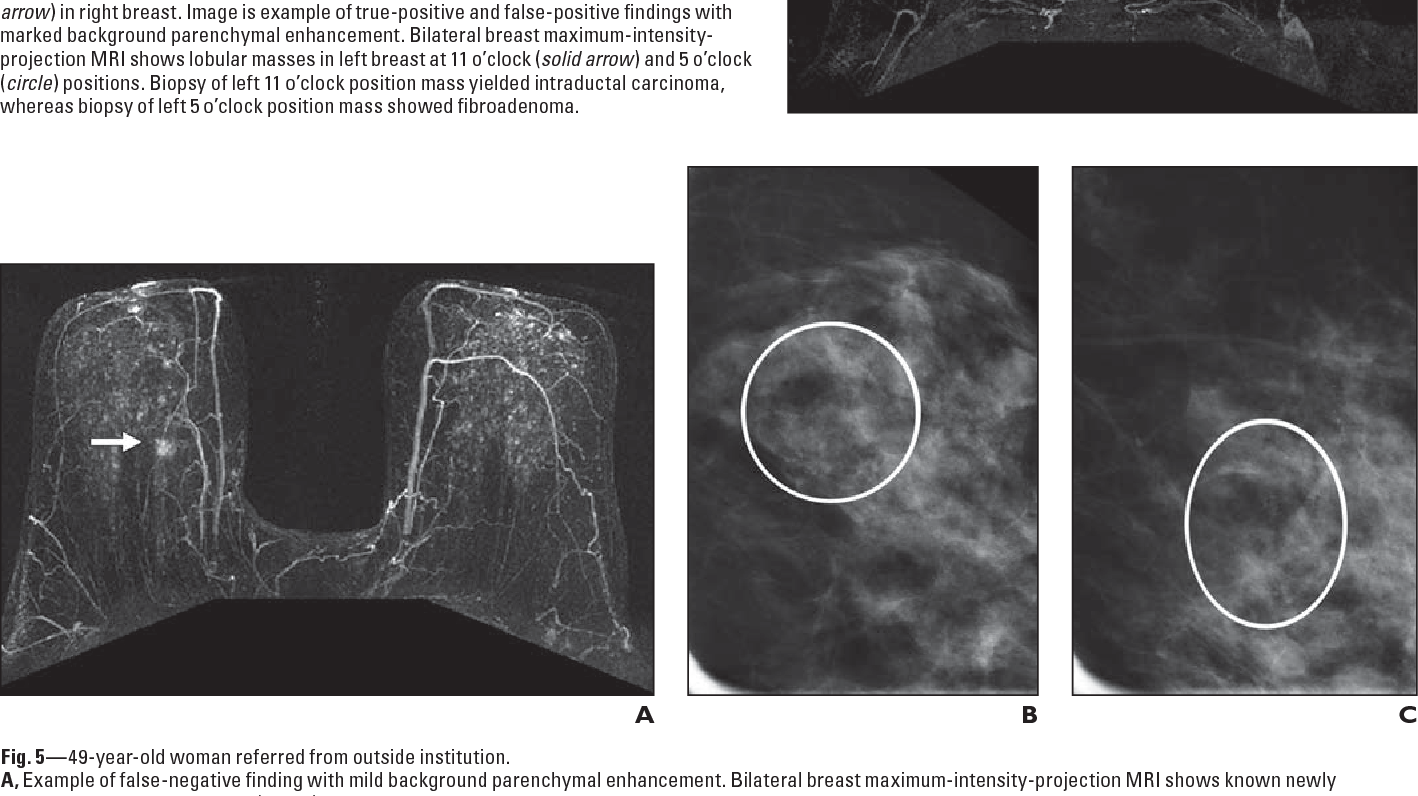
Mild Background Parenchymal Enhancement. All accessible MRI examinations from 128 women during a limited time period in 2016 were evaluated. We investigated the correlations between background parenchymal enhancement BPE and MRI interpretations with respect to short-interval follow-ups and biopsy rates. Any degree of background parenchymal enhancement beyond baseline was associated with an increased risk of breast cancer development however mammographic breast density and the extent of fibroglandular breast tissue were not associated with any change in baseline breast cancer risk. They found that the presence of background parenchymal enhancement on a womans initial MRI seemed to predict a greater cancer risk.
 Classification Of Background Parenchymal Enhancement According To Bi Rads Download Scientific Diagram From researchgate.net
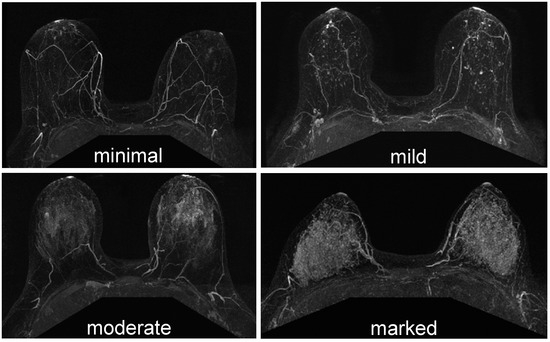
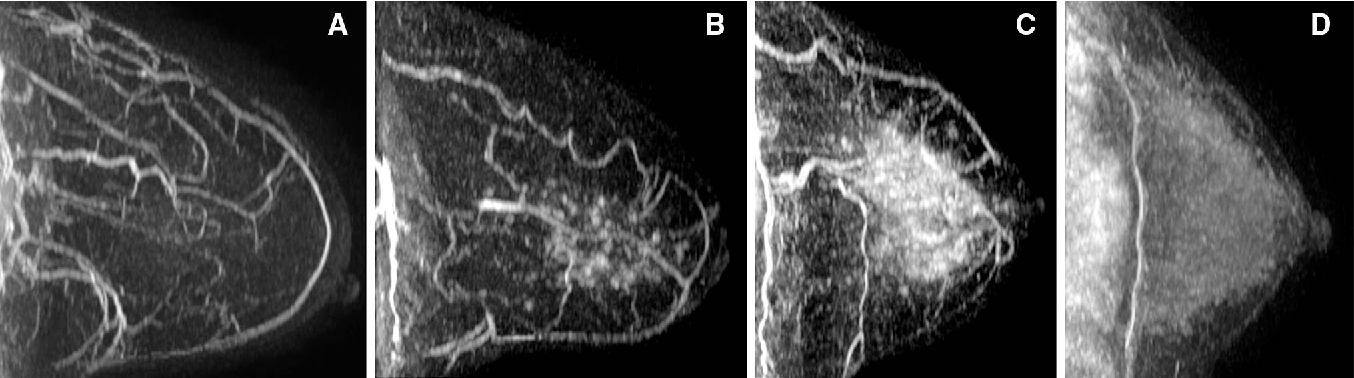
Minimal 25 enhancement of glandular tissue fig. Moderate or marked background parenchymal enhancement was also associated with a higher abnormal interpretation rate compared with minimal or mild background parenchymal enhancement 305 vs 233. The MIP image gives a good overview of both breasts. Transverse THRIVE MR image obtained after intravenous administration of a gadolinium chelate in the transverse plane and B subtracted THRIVE MR image show the tumor that was easily detectable as a mass-like lesion. BPE is categorized as minimal mild moderate and marked according to the Breast Imaging Reporting and Data System BI-RADS 1 3. They found that the presence of background parenchymal enhancement on a womans initial MRI seemed to predict a greater cancer risk.
Epub ahead of print.
PLOS ONE 2016. Background parenchymal enhancement BPE which is defined as the enhancement of normal fibroglandular tissue on contrast-enhanced dynamic breast magnetic resonance imaging MRI has drawn considerable attention in recent years. These patterns and the. Background Background parenchymal enhancement BPE on breast magnetic resonance imaging MRI may be associated with breast cancer risk but previous studies of the association are equivocal and limited by incomplete blinding of BPE assessment. Moderate or marked background parenchymal enhancement was also associated with a higher abnormal interpretation rate compared with minimal or mild background parenchymal enhancement 305 vs 233. Epidemiology Background parenchymal enhancement is more common in younger patients with dense breasts 18.
 Source:
Typically BPE is minimal or mild in overall degree with a bilateral symmetric diffuse distribution and slow early and persistent delayed kinetic features. 101371journalpone0158573 Cite This Page. BPE is thought to be under the effect of blood flow in dense. Background parenchymal enhancement BPE of the breast via magnetic resonance imaging MRI is associated with future invasive breast cancer risk independent of breast density according to results from a recent study published in the Journal of Clinical Oncology 2019 Jan 9. Imaging is termed background parenchymal enhancementBPE.
 Source: onlinelibrary.wiley.com
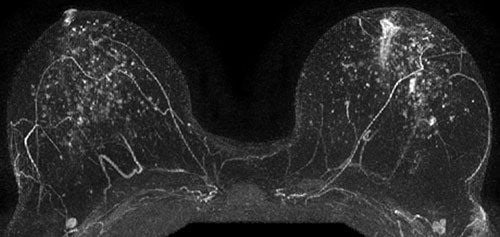
1a mild 2550 enhancement of glandular tissue fig. A blinded radiologist visually categorized BPE as minimal mild moderate or marked. MRI-density is a volumetric measure of breast density that is highly correlated with mammographic density an established breast cancer risk factor. Imaging is termed background parenchymal enhancementBPE. Epidemiology Background parenchymal enhancement is more common in younger patients with dense breasts 18.
 Source: mdpi.com
BPE does not directly correlate with amount of fibroglandular tissue seen on mammography. Typically BPE is minimal or mild in overall degree with a bilateral symmetric diffuse distribution and slow early and persistent delayed kinetic features. Minimal 25 enhancement of glandular tissue fig. For each mri examination background parenchymal enhancement was prospectively assigned one of four categories in accordance with the anticipated bi-rads mri lexicon classification system. Background Background parenchymal enhancement BPE on breast magnetic resonance imaging MRI may be associated with breast cancer risk but previous studies of the association are equivocal and limited by incomplete blinding of BPE assessment.
 Source: semanticscholar.org
Any degree of background parenchymal enhancement beyond baseline was associated with an increased risk of breast cancer development however mammographic breast density and the extent of fibroglandular breast tissue were not associated with any change in baseline breast cancer risk. Background parenchymal enhancement BPE of the breast via magnetic resonance imaging MRI is associated with future invasive breast cancer risk independent of breast density according to results from a recent study published in the Journal of Clinical Oncology 2019 Jan 9. Endogenous estrogen concentrations are positively. BPE is thought to be under the effect of blood flow in dense. Background Parenchymal Enhancement at Breast MR Imaging.
 Source: academicradiology.org
Background parenchymal enhancement BPE which represents normal fibro-glandular tissue enhancement in DCE-MRI is considered to relate to hormonally active glandular tissue 2. Background parenchymal enhancement on breast MRI refers to the normal contrast enhancement of fibroglandular tissue. Reflecting hormonal influence background enhancement is decreased after menopause 2. MRI Background Parenchymal Enhancement Is Not Associated with Breast Cancer. Endogenous estrogen concentrations are positively.
 Source: sciencedirect.com
Background parenchymal enhancement BPE can be defined as the enhancement of breast fibroglandular tissue after intravenous administration of a contrast agent on breast magnetic resonance imaging MRI In recent years BPE has gained great interest and was included in the last edition of the Breast Imaging Reporting and Data System BI-RADS MRI. Moderate or marked background parenchymal enhancement was also associated with a higher abnormal interpretation rate compared with minimal or mild background parenchymal enhancement 305 vs 233. BPE may vary in degree and distribution in different patients as well as in the same patient over time. Transverse THRIVE MR image obtained after intravenous administration of a gadolinium chelate in the transverse plane and B subtracted THRIVE MR image show the tumor that was easily detectable as a mass-like lesion. Epidemiology Background parenchymal enhancement is more common in younger patients with dense breasts 18.
 Source: healthmanagement.org
Normal parenchymal enhancement at breast MR imaging is termed background parenchymal enhancement BPE. Endogenous estrogen concentrations are positively. Background parenchymal enhancement BPE of the breast via magnetic resonance imaging MRI is associated with future invasive breast cancer risk independent of breast density according to results from a recent study published in the Journal of Clinical Oncology 2019 Jan 9. PLOS ONE 2016. Epidemiology Background parenchymal enhancement is more common in younger patients with dense breasts 18.
 Source: onlinelibrary.wiley.com
Background parenchymal enhancement BPE which represents normal fibro-glandular tissue enhancement in DCE-MRI is considered to relate to hormonally active glandular tissue 2. MRI Background Parenchymal Enhancement Is Not Associated with Breast Cancer. BPE may vary in degree and distribution in different patients as well as in the same patient over time. BPE does not directly correlate with amount of fibroglandular tissue seen on mammography. This prominence is mostly due to the fact that similar to the association of breast cancer and breast density on.
 Source: academicradiology.org
Background parenchymal enhancement BPE can be defined as the enhancement of breast fibroglandular tissue after intravenous administration of a contrast agent on breast magnetic resonance imaging MRI In recent years BPE has gained great interest and was included in the last edition of the Breast Imaging Reporting and Data System BI-RADS MRI. Reflecting hormonal influence background enhancement is decreased after menopause 2. MRI-density is a volumetric measure of breast density that is highly correlated with mammographic density an established breast cancer risk factor. For each mri examination background parenchymal enhancement was prospectively assigned one of four categories in accordance with the anticipated bi-rads mri lexicon classification system. Normal parenchymal enhancement at breast MR imaging is termed background parenchymal enhancement BPE.
 Source: researchgate.net
Endogenous estrogen concentrations are positively. 1b moderate 5075 enhancement of. A blinded radiologist visually categorized BPE as minimal mild moderate or marked. All accessible MRI examinations from 128 women during a limited time period in 2016 were evaluated. There are four terms that describe the BPE.
Source: researchgate.net
These patterns and the. Background parenchymal enhancement BPE of the breast via magnetic resonance imaging MRI is associated with future invasive breast cancer risk independent of breast density according to results from a recent study published in the Journal of Clinical Oncology 2019 Jan 9. Endogenous estrogen concentrations are positively. Imaging is termed background parenchymal enhancementBPE. Background parenchymal enhancement bpe on breast mri refers to the normal enhancement of the fibroglandular tissue and is categorized by the breast imaging reporting and data system birads as minimal mild moderate and marked4moderate and marked bpe can possibly be misinterpreted as suspicious or may mask actual malignant lesions5.
 Source: jksronline.org
1a mild 2550 enhancement of glandular tissue fig. All accessible MRI examinations from 128 women during a limited time period in 2016 were evaluated. Normal Patterns Diagnostic Challenges and Potential for False-Positive and False-Negative. Normal parenchymal enhancement at breast MR imaging is termed background parenchymal enhancement BPE. We investigated the correlations between background parenchymal enhancement BPE and MRI interpretations with respect to short-interval follow-ups and biopsy rates.
 Source: semanticscholar.org
Background parenchymal enhancement BPE of the breast via magnetic resonance imaging MRI is associated with future invasive breast cancer risk independent of breast density according to results from a recent study published in the Journal of Clinical Oncology 2019 Jan 9. Any degree of background parenchymal enhancement beyond baseline was associated with an increased risk of breast cancer development however mammographic breast density and the extent of fibroglandular breast tissue were not associated with any change in baseline breast cancer risk. 1b moderate 5075 enhancement of. All accessible MRI examinations from 128 women during a limited time period in 2016 were evaluated. BPE may vary in degree and distribution in different patients as well as in the same patient over time.
Source: researchgate.net
1a mild 2550 enhancement of glandular tissue fig. They found that the presence of background parenchymal enhancement on a womans initial MRI seemed to predict a greater cancer risk. All accessible MRI examinations from 128 women during a limited time period in 2016 were evaluated. Minimal mild moderate and marked. A blinded radiologist visually categorized BPE as minimal mild moderate or marked.
 Source: semanticscholar.org
Any degree of background parenchymal enhancement beyond baseline was associated with an increased risk of breast cancer development however mammographic breast density and the extent of fibroglandular breast tissue were not associated with any change in baseline breast cancer risk. PLOS ONE 2016. Epub ahead of print. Minimal mild moderate and marked. They found that the presence of background parenchymal enhancement on a womans initial MRI seemed to predict a greater cancer risk.
 Source: oncohemakey.com
BPE is categorized as minimal mild moderate and marked according to the Breast Imaging Reporting and Data System BI-RADS 1 3. To investigate if baseline andor changes in contralateral background parenchymal enhancement BPE and fibroglandular tissue FGT measured on magnetic resonance imaging MRI and mammographic breast density MD can be used as imaging biomarkers for overall and recurrence-free survival in patients with invasive lobular carcinomas. Background parenchymal enhancement BPE which is defined as the enhancement of normal fibroglandular tissue on contrast-enhanced dynamic breast magnetic resonance imaging MRI has drawn considerable attention in recent years. Background parenchymal enhancement on breast MRI refers to the normal contrast enhancement of fibroglandular tissue. 101371journalpone0158573 Cite This Page.
 Source: semanticscholar.org
Endogenous estrogen concentrations are positively. Epidemiology Background parenchymal enhancement is more common in younger patients with dense breasts 18. Imaging is termed background parenchymal enhancementBPE. Normal parenchymal enhancement at breast MR imaging is termed background parenchymal enhancement BPE. Minimal 25 enhancement of glandular tissue fig.
 Source: researchgate.net
Mild moderate and marked background parenchymal enhancement is associated with a significantly lower rate of BI-RADS categories 1 and 2 assessments and a significantly higher rate of BI-RADS category 3 assessments than minimal enhancement. BPE is thought to be under the effect of blood flow in dense. Moderate or marked background parenchymal enhancement was also associated with a higher abnormal interpretation rate compared with minimal or mild background parenchymal enhancement 305 vs 233. Epub ahead of print. Women with at least mild background parenchymal enhancement.
This site is an open community for users to do sharing their favorite wallpapers on the internet, all images or pictures in this website are for personal wallpaper use only, it is stricly prohibited to use this wallpaper for commercial purposes, if you are the author and find this image is shared without your permission, please kindly raise a DMCA report to Us.
If you find this site adventageous, please support us by sharing this posts to your favorite social media accounts like Facebook, Instagram and so on or you can also save this blog page with the title mild background parenchymal enhancement by using Ctrl + D for devices a laptop with a Windows operating system or Command + D for laptops with an Apple operating system. If you use a smartphone, you can also use the drawer menu of the browser you are using. Whether it’s a Windows, Mac, iOS or Android operating system, you will still be able to bookmark this website.


